
Have you ever walked into a forest so tall it felt like the trees were trying to touch the clouds on purpose? That’s the kind of feeling Redwood National and State Parks delivers, and honestly, no photo really prepares you for it. Tucked along the foggy Northern California coastline, this is where the tallest trees on the planet quietly tower over everything, including your expectations.
Let’s wander through what makes this place so unforgettable.
What Are Redwood National and State Parks?
Redwood National and State Parks isn’t just one park, it’s actually a partnership between a national park and three California state parks: Del Norte Coast, Jedediah Smith, and Prairie Creek Redwoods. Together, they protect nearly half of all remaining old-growth coast redwood forests left on Earth. Think of it as a joint venture between the state and federal government, one built entirely around protecting trees that are, quite literally, record-breakers.
A Quick Snapshot of the Parks
Established in 1968, with the state parks folded into a unified management approach in 1994, this combined park system spans over 130,000 acres. It stretches along roughly 40 miles of Northern California’s rugged coastline, mixing dense redwood forest with rocky shores, rivers, and prairie land.
The History Behind Redwood National and State Parks
Before you can appreciate how these parks came to be, it helps to understand just how close we came to losing these ancient forests entirely.
The Fight to Save the Redwoods
By the early 1900s, logging companies were cutting through old-growth redwoods at an alarming pace. Entire groves that had stood for a thousand years were being reduced to lumber in a matter of days. In response, conservationists formed the Save the Redwoods League in 1918, working for decades to purchase and protect what forest remained. Their persistence eventually led to the creation of the national park in 1968, though by then, roughly 90 percent of the original old-growth redwood forest had already been logged.
The People Who Lived Here First
Long before conservationists entered the picture, the Yurok, Tolowa, and Chilula peoples lived among these towering trees for thousands of years. They built their lives around the redwood forests and coastal resources, developing deep cultural and spiritual connections to the land. Today, the Yurok Tribe remains actively involved in stewardship efforts within the park, a partnership that continues to shape how the forest is protected.
Meeting the Giants: The Coast Redwoods
If Sequoia National Park has the biggest trees by volume, Redwood National and State Parks has the tallest trees by height, and the difference is dramatic once you’re standing beneath one.
Hyperion: The Tallest Tree in the World
Somewhere within this park grows Hyperion, officially the tallest known tree on Earth, standing at just over 380 feet. That’s taller than the Statue of Liberty, pedestal included. Its exact location is kept secret by park officials to protect it from foot traffic damage, so don’t expect to find a trail marker pointing the way. It’s a bit like knowing a celebrity lives in your neighborhood but never quite spotting them.
Why Coast Redwoods Grow So Tall
So why do these trees reach such staggering heights? Coast redwoods thrive on a steady diet of coastal fog, which supplies much-needed moisture during California’s dry summers. Combine that with mild temperatures and nutrient-rich soil, and you get the perfect recipe for trees that just keep climbing skyward, generation after generation.
Top Things to Do in Redwood National and State Parks
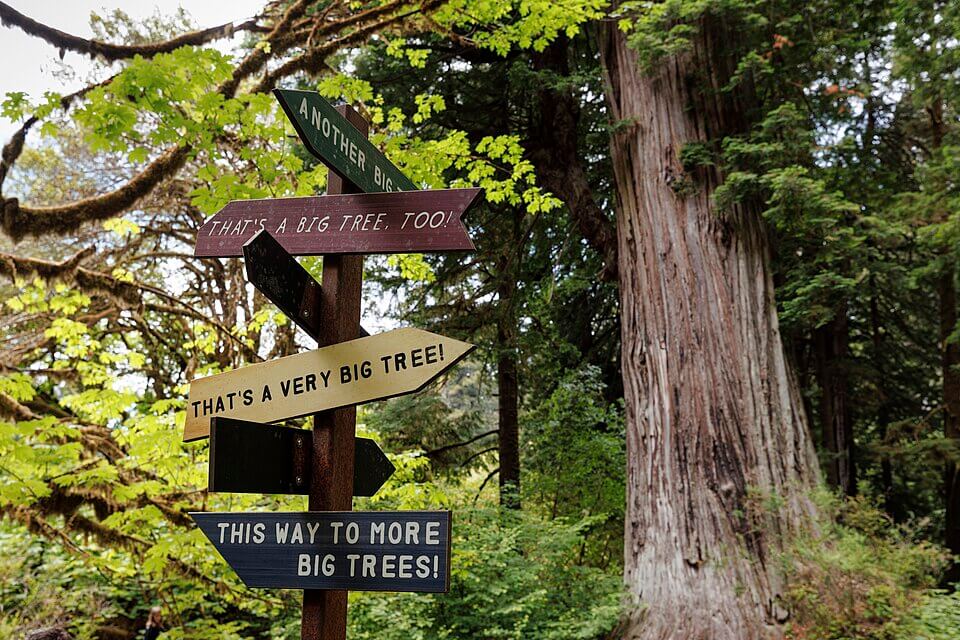
Alright, the trees are impressive, but what’s there to actually do once you’re standing among them?
Hiking Trails for Every Skill Level
Whether you want an easy stroll or a proper workout, these parks have trails to match.
Tall Trees Grove Trail
This moderate trail takes you into a grove containing some of the park’s tallest trees. Access requires a permit, which helps limit crowds and keeps the grove feeling wonderfully untouched, like you’ve stumbled onto a secret.
Fern Canyon
Picture 50-foot walls covered entirely in ferns, with a stream trickling along the canyon floor. Fern Canyon feels almost prehistoric, which makes sense given it was actually used as a filming location for scenes in Jurassic Park 2. Walking through it, you half expect a dinosaur to peek out from behind the greenery.
Driving the Scenic Routes
If you’d rather explore by car, the Newton B. Drury Scenic Parkway winds through old-growth forest, offering an easy way to soak in the redwoods without breaking a sweat. It’s proof that sometimes the best views come with air conditioning included.
Wildlife You Might Encounter
These parks aren’t just about trees, they’re a haven for wildlife too. Roosevelt elk are the stars of the show, often spotted grazing in open meadows near Prairie Creek. Black bears roam the forest, while along the coastline, you might catch sight of sea lions, harbor seals, or even migrating gray whales offshore. Birdwatchers can keep an eye out for the elusive marbled murrelet, a seabird that nests deep in the redwood canopy.
Best Time to Visit Redwood National and State Parks
Timing matters here, especially since coastal weather can be unpredictable.
Visiting in Summer vs. Winter
Summer brings the classic coastal fog, which, while atmospheric, can limit visibility on some viewpoints. It’s still the most popular time to visit, with mild temperatures and full trail access. Winter, on the other hand, brings rain and a quieter, greener forest, along with the chance to spot migrating whales offshore. Each season paints the redwoods in a slightly different light, literally.
Where to Stay Near the Parks
Inside the park boundaries, several campgrounds offer a rustic, immersive experience beneath the redwood canopy. For more comfort, nearby towns like Crescent City, Orick, and Eureka provide hotels, restaurants, and easy access to park entrances.
Tips for Planning Your Trip
Before you head out, keep these tips in mind:
- Get a permit early if you plan to hike Tall Trees Grove.
- Pack layers, coastal weather shifts fast, even in summer.
- Watch for elk on roadways, especially near Prairie Creek.
- Cell service is limited throughout much of the park.
- Check tide charts if you plan to explore coastal areas like Gold Bluffs Beach.
Conclusion
Redwood National and State Parks is a reminder that some of the world’s most awe-inspiring wonders don’t roar or erupt, they just quietly grow, for centuries, right above our heads. Whether you’re wandering through Fern Canyon, driving beneath a canopy older than most nations, or simply standing in silence near a tree that might be the tallest on Earth, this place has a way of resetting your sense of scale. So lace up your boots, grab a rain jacket just in case, and go see for yourself why these ancient giants have survived this long. They’ve earned the visit.
Frequently Asked Questions (FAQs)
1. How is Redwood National and State Parks different from Sequoia National Park? Redwood parks protect coast redwoods, the tallest trees on Earth, while Sequoia National Park protects giant sequoias, the largest trees by volume.
2. Can I see Hyperion, the tallest tree in the world?
No, its exact location is kept secret by park officials to protect it from damage caused by heavy foot traffic.
3. Do I need a permit to hike in these parks?
Most trails don’t require permits, but access to Tall Trees Grove does require a free permit obtained in advance.
4. Is Redwood National and State Parks good for a day trip?
Yes, popular spots like Fern Canyon and the scenic parkway can be enjoyed in a single day, though multiple days allow for deeper exploration.
5. What’s the best time to spot Roosevelt elk?
Early morning or late afternoon, particularly in fall during mating season, offers the best chances of spotting elk in open meadows.